

Ear acupuncture for stress, sleep, pain and wellbeing

Ear acupuncture, also known as auricular acupuncture, is a specialised form of acupuncture that only uses points on the ear. The ear is traditionally mapped as an upside-down foetus, with the head representing the earlobe and the body extending upwards. In auricular acupuncture, the ear is considered a microsystem of the body, with points believed to correspond to different internal organs and areas of the body.
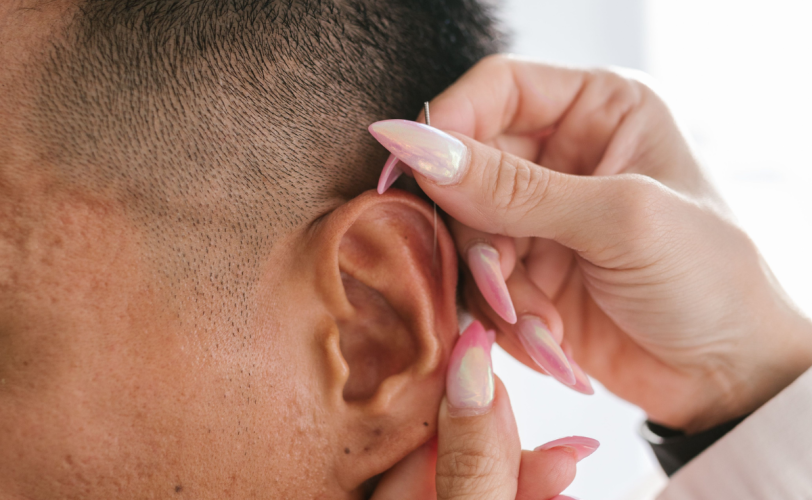
Very fine acupuncture needles are inserted into specific points that represent organs and body systems. This is thought to stimulate nerve endings that reach the brain, which then stimulates the target organs via nerve signals through the central nervous system, triggering natural healing in the body on a deeper level.
Stimulation of the nerves by the needles may also encourage the release of endorphins, the body’s natural pain-relieving chemicals, which can play a role in pain perception. Needles are left in for 30 minutes, during which you are encouraged to sit and relax.
NADA protocol
NADA protocol uses five specific points on the ear to support addiction recovery, detoxification, stress, anxiety, PTSD symptoms, sleep difficulties and support during emotional crisis. It works well in combination with other naturopathic treatments and counselling therapies.
It’s thought that by influencing endogenous opioid and autonomic nervous system activity, ear acupuncture may potentially reduce pain, stress and emotional distress. Because stress and distress can intensify cravings, these effects could contribute to reduced cravings in some people too.
Battlefield acupuncture
Battlefield acupuncture is a form of ear acupuncture performed on specific points developed for rapid pain relief. It became well known in the USA military, which is where the name battlefield comes from.
There are five points within this protocol, but in my experience, not all five points are needed, as most clients receive enough pain reduction after two or three points are needled. It works by interrupting the pain signals being communicated to and from the brain. The needles break the pain beta-wave cycle, stopping the pain at the first point in the brain.
Battlefield acupuncture is great for pain reduction, but it’s not fixing the root cause of the problem, which is why the pain level is reduced but not completely removed. Pain is a protective mechanism that the body uses to limit movement so it can start the healing and repair process. If you completely remove the pain, then you can end up causing more damage. By reducing the pain down to a much more manageable level, it can stop the pain from impacting day-to-day life and allow gentle movement, which can support the blood and lymphatic flow to the site of injury, which can further support the healing process.
I’ve found battlefield acupuncture useful with arthritis sufferers who need more instant pain relief whilst working on other naturopathic treatments more aimed at treating the root cause, and those waiting for knee and hip replacements where prescription painkillers are no longer helping. In my own practice, I have witnessed amazing results using battlefield acupuncture points for rapid pain relief.
Battlefield acupuncture uses small gold-plated studded needles that are inserted into key points and left in place for 3-4 days.
Auricular acupuncture in NHS services
Auricular acupuncture is used within some sectors of the NHS. Walsall Healthcare NHS Trust offer patients auricular acupuncture to support their wellbeing when going through cancer treatment and during palliative care. They offer it as a relief (alongside medication) for a variety of conditions, including hormone-related symptoms such as hot flushes and sweats.
Guy's and St Thomas' NHS Foundation Trust offer ear acupuncture drop-in clinics for:
- stress management
- stopping smoking
- addiction
- depression
- anxiety
- sleep issues.
NHS patients and private patients under the care of a Mount Vernon Cancer Centre doctor can be referred for complimentary therapies to help relieve stress and stress-related symptoms. This includes auricular acupuncture using the NADA protocol, which they say has been helpful with a range of conditions, including the side effects of both cancer and its treatment.
What if you don’t like needles?
There are alternatives to needles, although needling provides the best stimulation. Ear seeds and magnets are very small beads attached to the back of a small sticky plaster that can be placed on acupuncture points and work like acupressure because they press on the point rather than pierce it. These are left on for a number of days and can be reactivated by pressing on the bead.
Sometimes practitioners also apply these to the ear after needling for home care. Some practitioners also use devices that stimulate the points with a small electrical impulse; this is just as effective as needling and is a good choice for children too.
What does ear acupuncture feel like?
For many people, it’s a relaxing experience that calms down an overactive nervous system and induces a good night's sleep. Sometimes it can feel a little painful where there is imbalance, but pain on insertion of the needle usually quickly dissipates.
The ear can also be probed before needling to find the exact points of imbalance, which can feel tender when pressed; this is a sign that the point needs to be needled and will benefit from the needle stimulation. I have found this to be very accurate; whenever there is chronic pain in the body, I’ve always found the reflex point on the ear to feel tender when pressed. Sometimes a little blood draws as the needle is removed, but it stops quickly.
How often do you need treatment?
This varies from person to person, with acute conditions usually needing a shorter treatment duration than more chronic health issues.
Safety information
Ear acupuncture cannot be done with:
- any skin disorders on the ear;
- valvular prostheses;
- first trimester of pregnancy;
- haemophiliacs (ear seeds, magnets and electro acupuncture are recommended instead);
- confused or intoxicated clients.
Caution needs to be taken with:
- epilepsy;
- clients prone to fainting;
- anticoagulant medication.
Side effects
Side effects are not very common, but some people may feel lightheaded or have tiny blood spots where the needles were inserted.
Ultimately, ear acupuncture offers a simple yet powerful way of supporting the body’s natural healing capacity. Its simplicity makes it accessible to everyone because treatments can be carried out comfortably in a chair and can even be offered in the comfort of your own home, so there’s no need to travel to a clinic for those with mobility issues.
References
Frontiers in Neuroscience (2024). Auricular acupuncture for pain relief and its mechanisms. PubMed PMID: 38501597.
Medical Acupuncture (2016). The NADA protocol: Integrative acupuncture in addictions and behavioural health. PMC5153313.
Walsall Healthcare NHS Trust. Specialist complementary therapy service.
Guy’s and St Thomas’ NHS Foundation Trust. Acupuncture community clinic.
East and North Hertfordshire Teaching NHS Trust. Complementary therapies – Lynda Jackson Macmillan Centre.

Find the holistic therapist for you
All therapists are verified professionals


